2026●True Grit Cleaning Co●Richmond, North Yorkshire
A 37-page website and brand identity for a Dales cleaning company, with 18 location pages and six service pages.
Cleaning is a sector flooded with template sites, the same stock photo of someone in marigolds, the same blue gradient hero, the same 'why choose us' grid.
Cleaning is a sector flooded with template sites, the same stock photo of someone in marigolds, the same blue gradient hero, the same 'why choose us' grid. True Grit is a small, owner-run operation covering Richmond, Darlington, Swaledale, and the Dales. They needed a website that reflected the work, careful, considered, deeply rooted in the landscape, and that competed credibly against franchises with national marketing budgets. Generic wasn't an option.
Client
True Grit Cleaning Co
Industry
Domestic, commercial & holiday let cleaning
Duration
8 weeks
Lighthouse score
LCP, mobile
Location pages
Service pages

The Dales feel like
the American West.
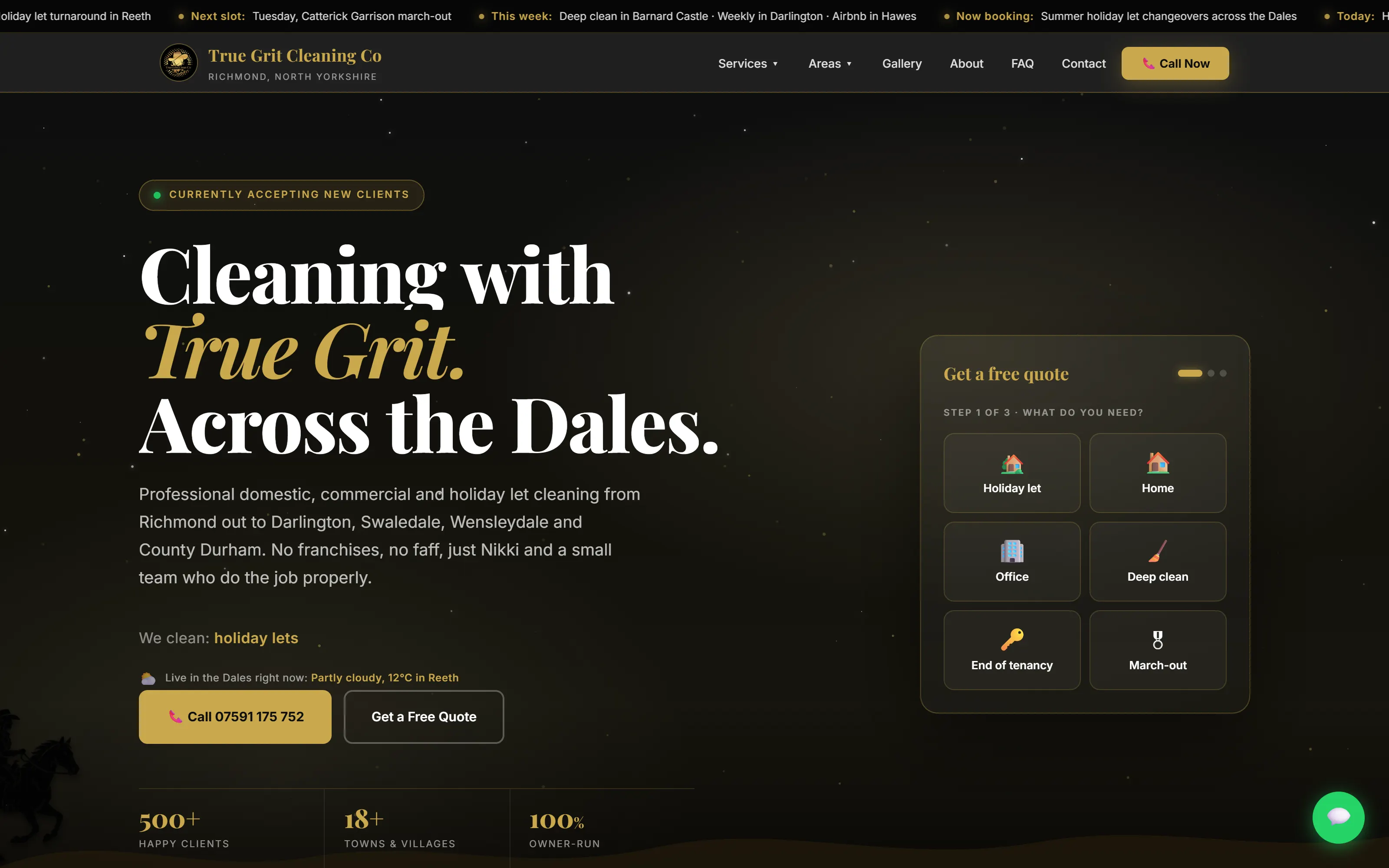
Vast, weathered, demanding, and we leaned into that without ever tipping into pastiche. An editorial italic serif wordmark, a deep brown and gold palette, and a lone rider crossing the hero like a still from a Coen Brothers film. The brand tells a buyer, before a word is read, that this is not the same as the other four 'Yorkshire Cleaning Co' sites in the results.
Six services. One that
nobody else offers.
Six dedicated service pages, each with its own structured-data markup, conversion-tuned CTAs and a callout tag. Catterick March-Out is the specialist offering, a first-time-pass guarantee for military families that nobody else in the area runs, and a search term True Grit now owns.
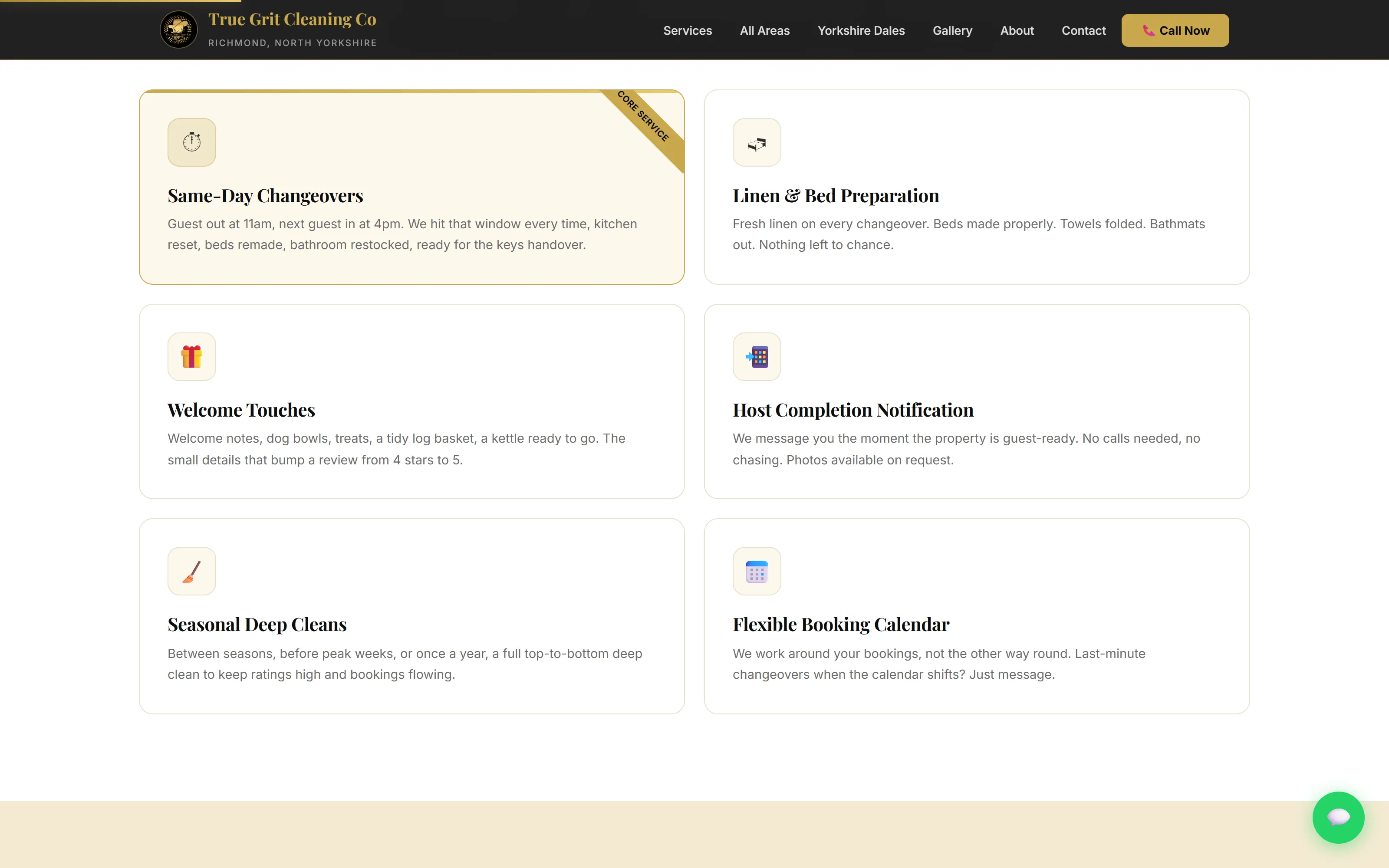
Six service pages, each with its own schema and CTA
A small detail that
says everything.
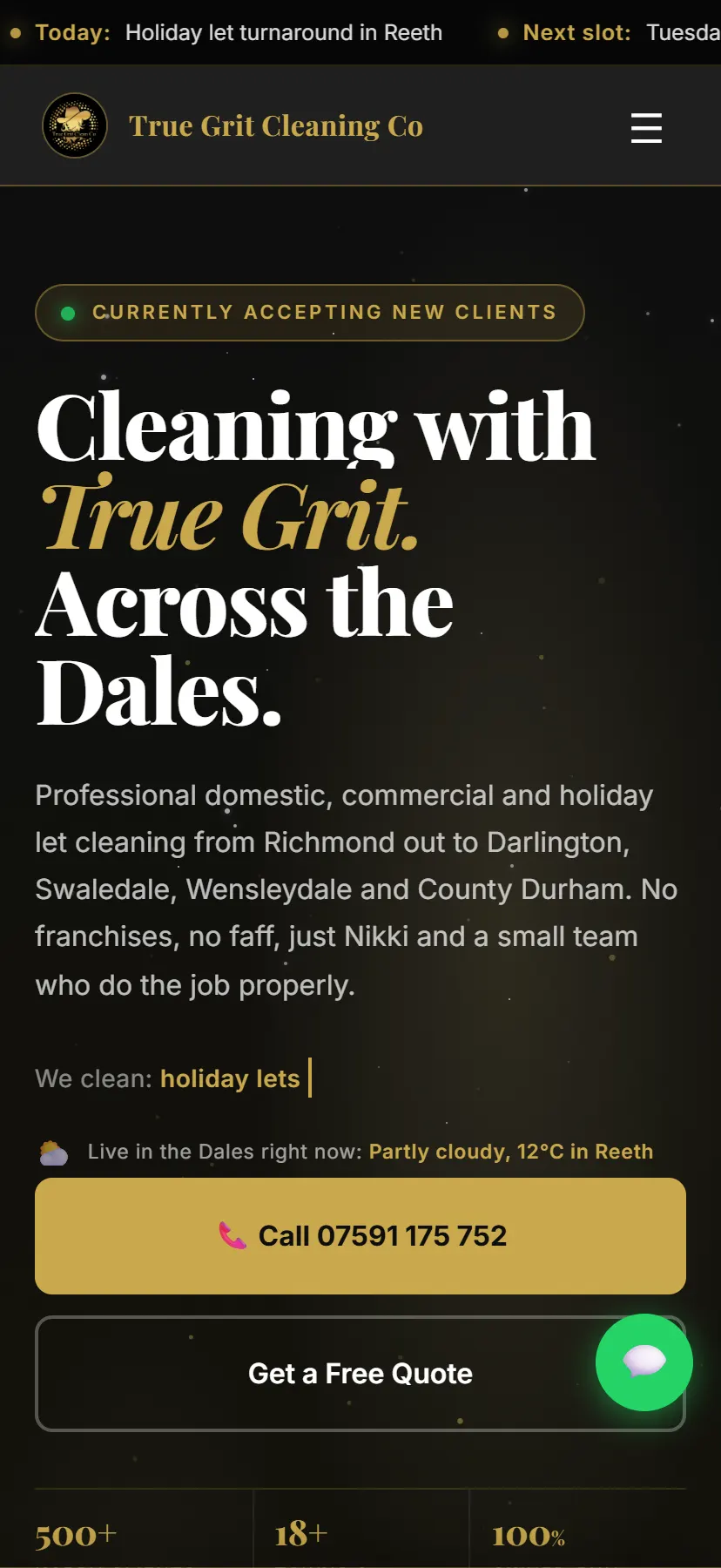
The hero shows the current weather in the Reeth area, pulled live and updated automatically. Nobody else in this sector does this. It signals rootedness, attention to place, and that the people behind the brand are actually there, in the Dales, today.

Live weather, pulled from the Reeth area
Where 'deep clean'
actually means deep.
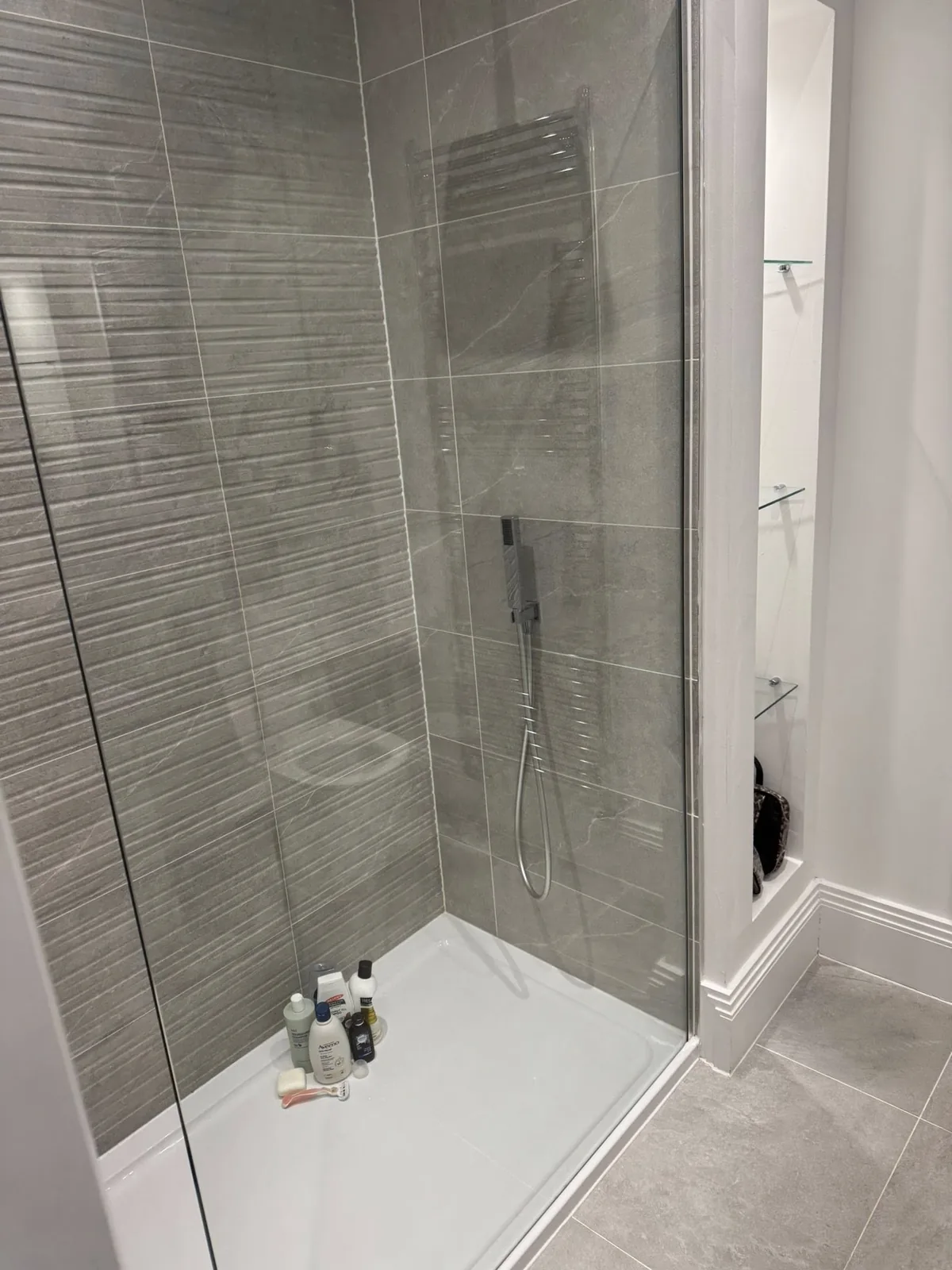
Holiday-let owners and property managers are buying a standard, not a visit. The site leads with the close-up proof: limescale lifted, screens and grout brought back, the bits a quick clean leaves behind.
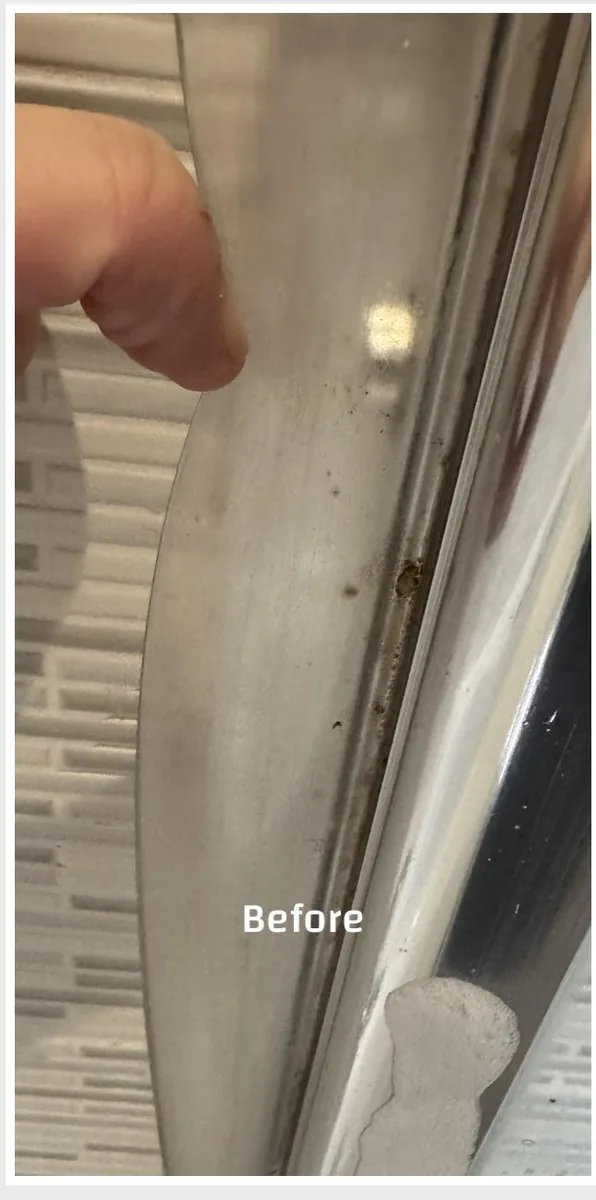
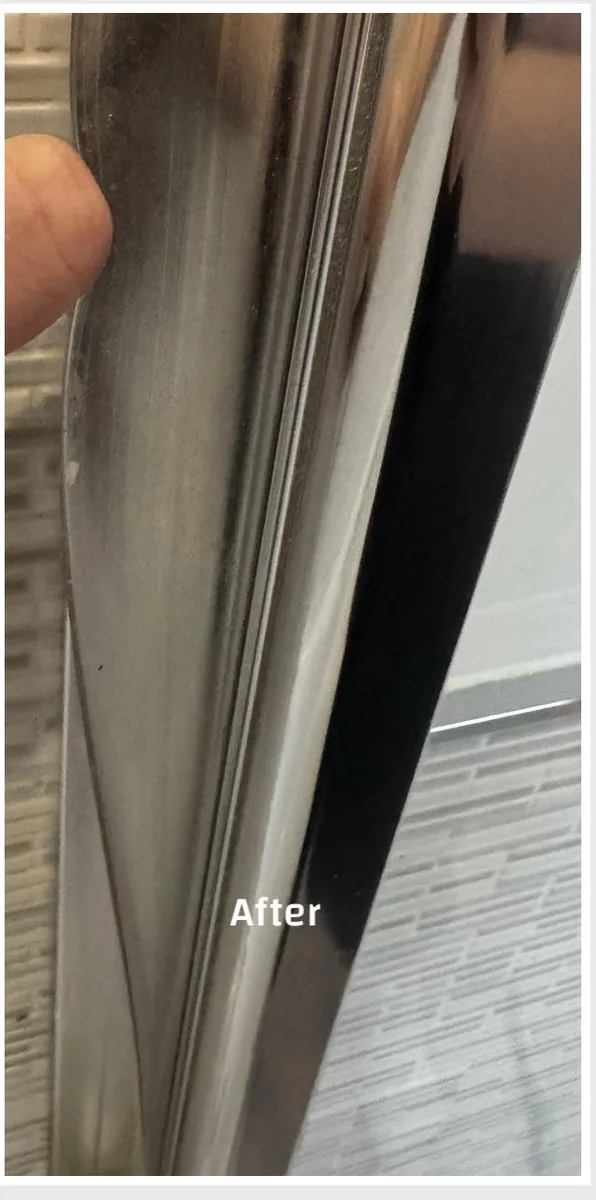
Shower screen, before and after a True Grit deep clean
Actual cleans,
across the Dales.
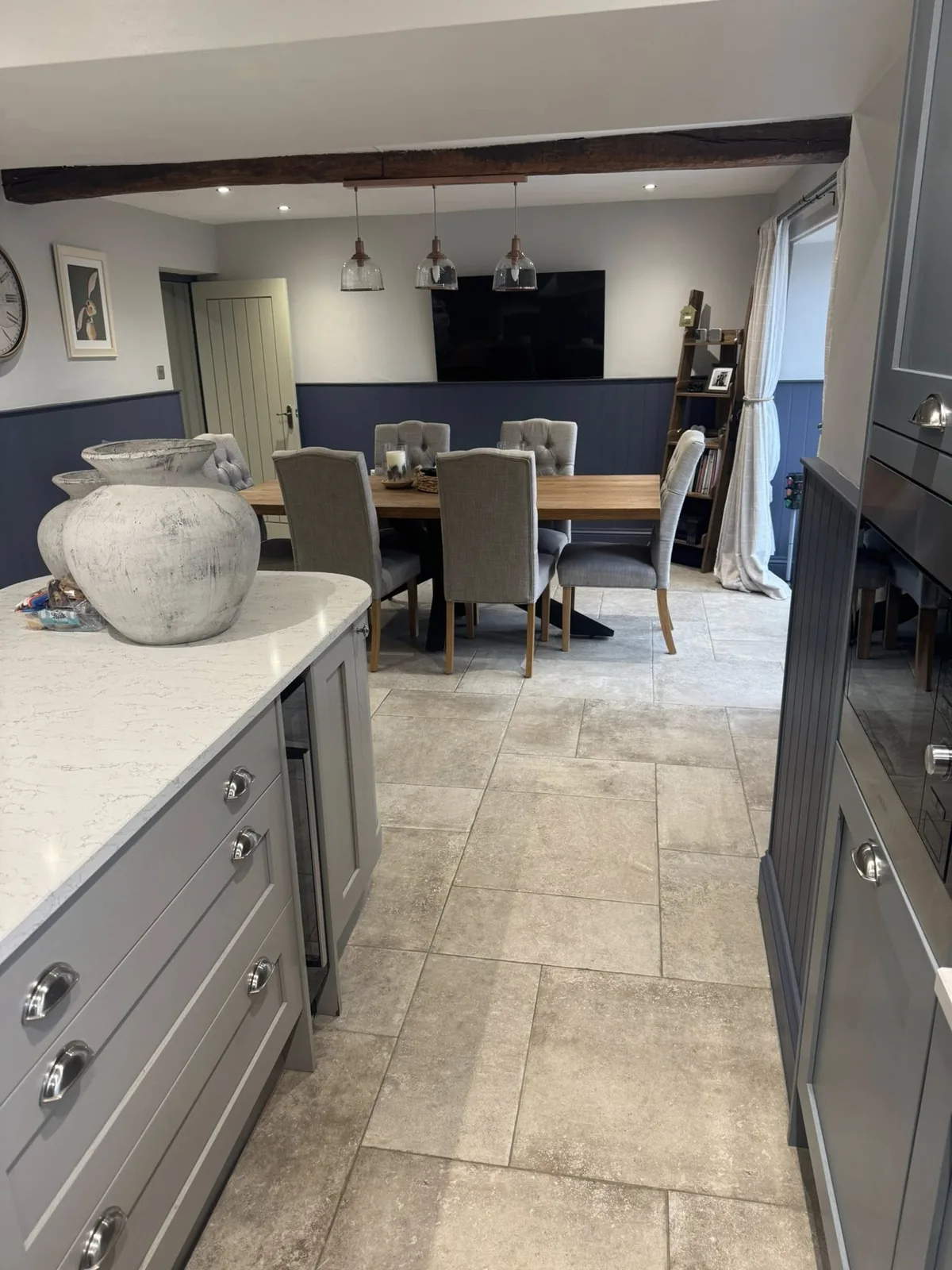
No stock libraries, no marigolds, no blue gradients. Barn conversions, holiday lets, kitchens and bathrooms from real jobs across Richmond, Darlington and the Dales, refreshed as new work comes in.
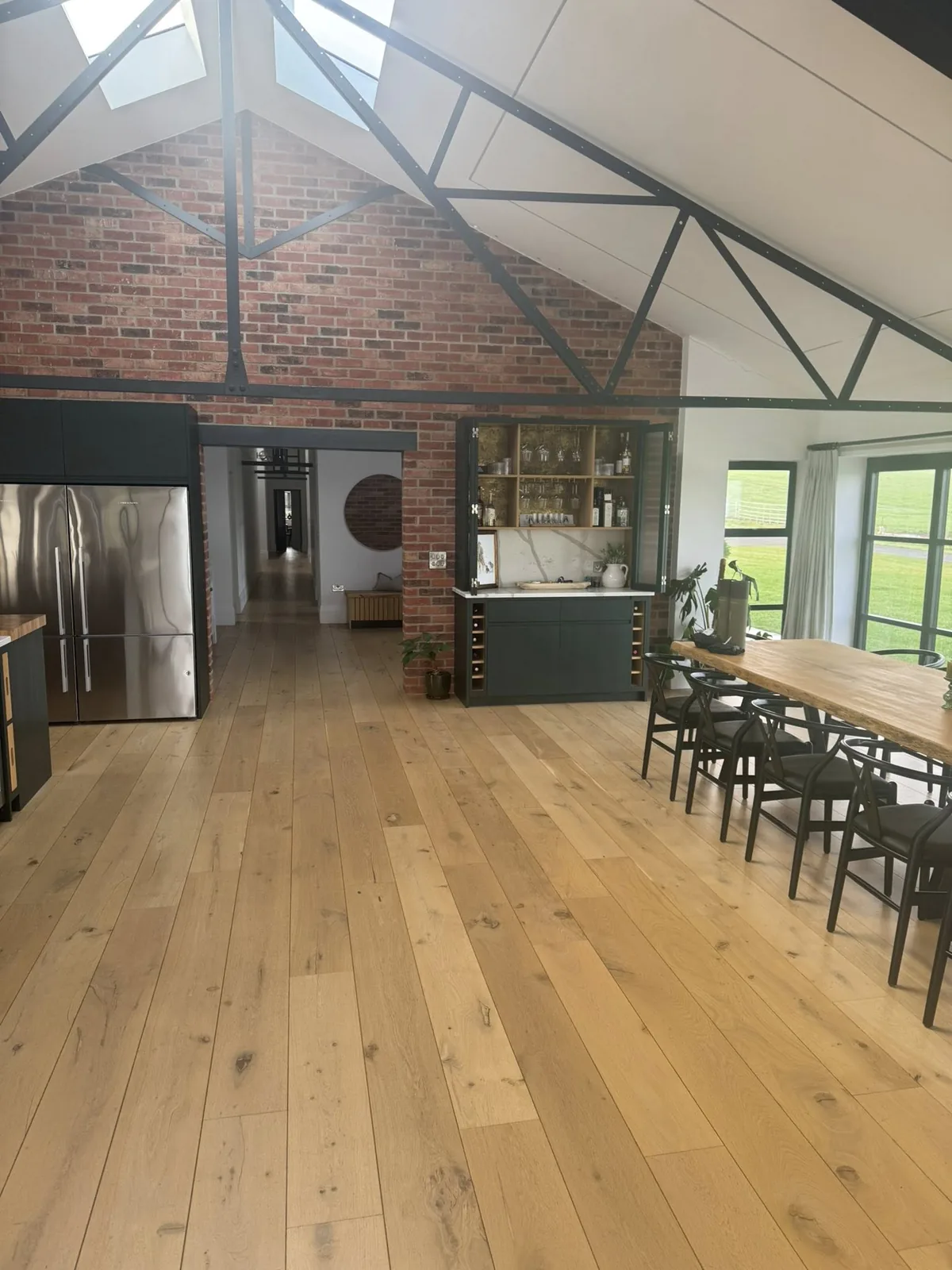
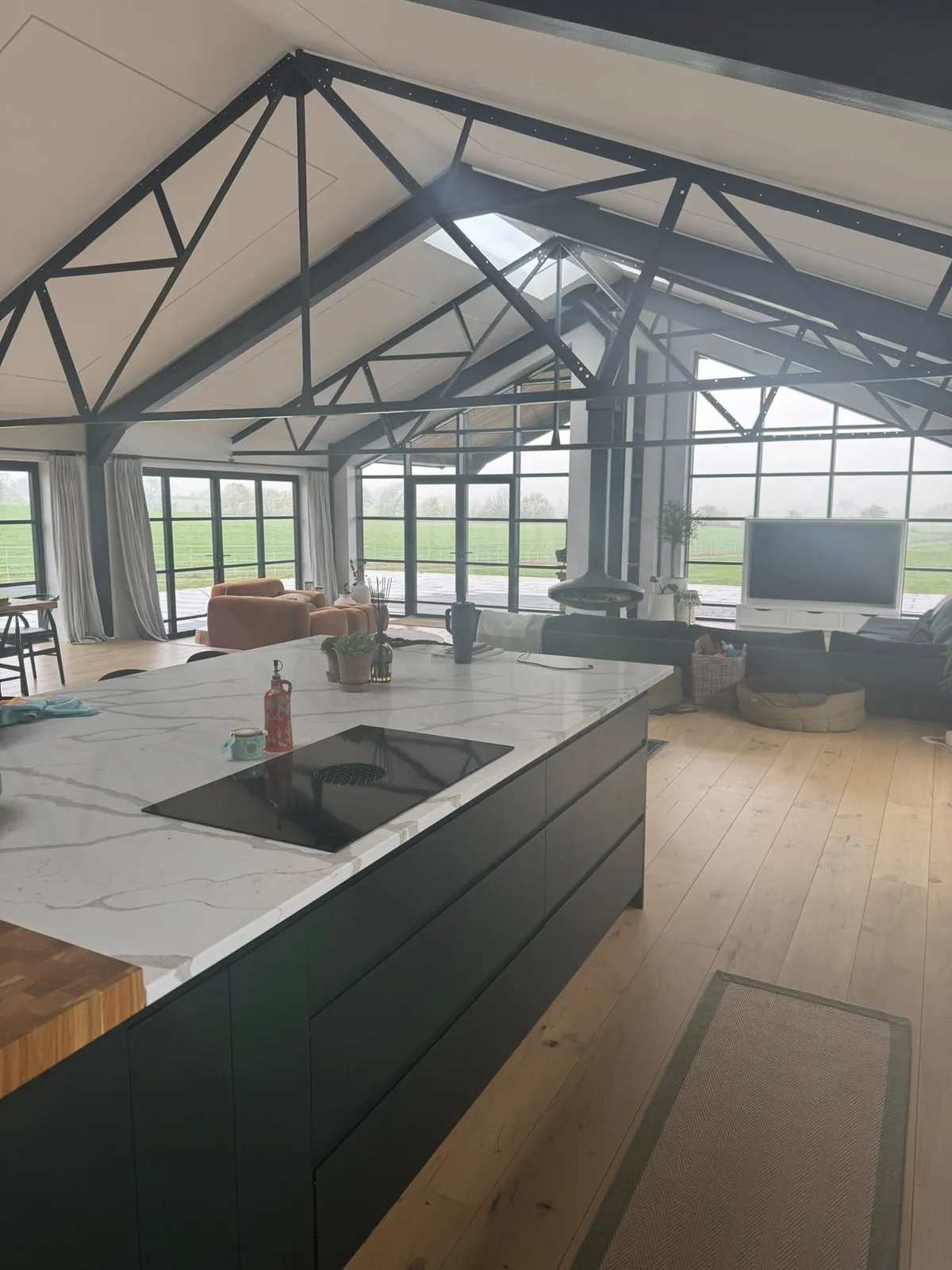
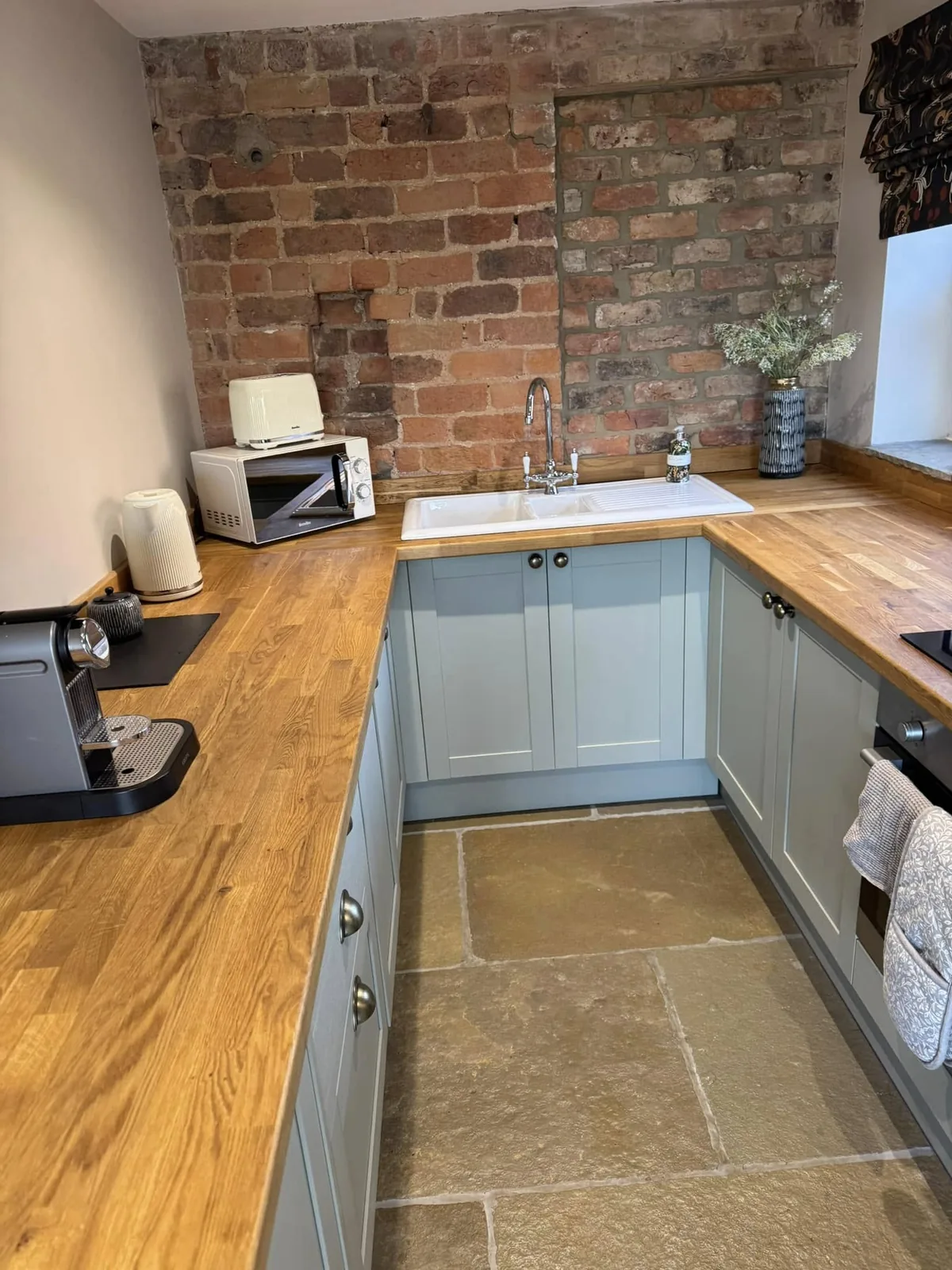
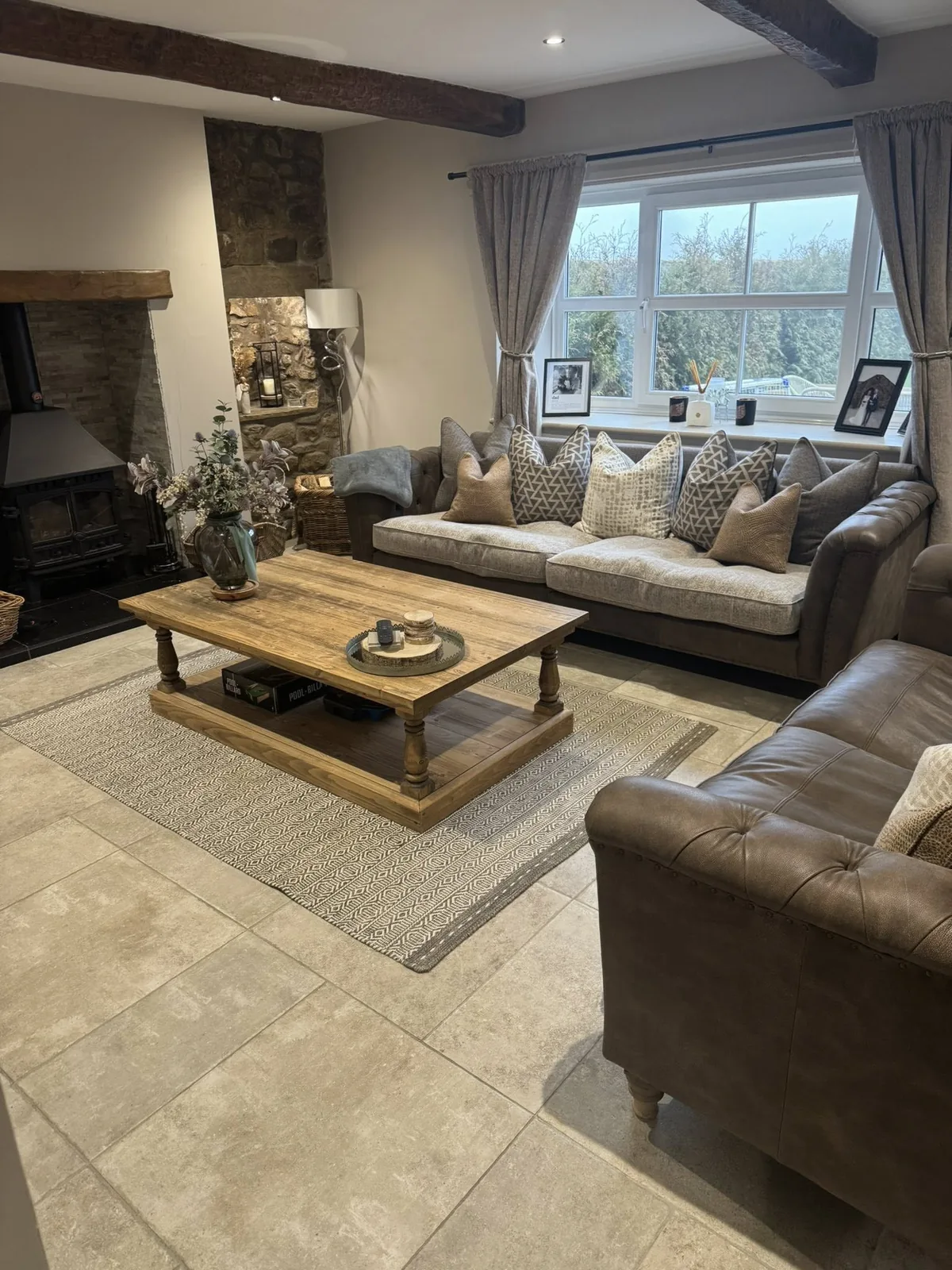
18 town pages.
Each one earns its keep.
Every live location page gets localised content, postcode-specific LocalBusiness schema, FAQs scoped to the town's typical jobs, and internal links into adjacent areas. Adding a new town is one entry in a data file; the page builds itself with full schema and content slots.
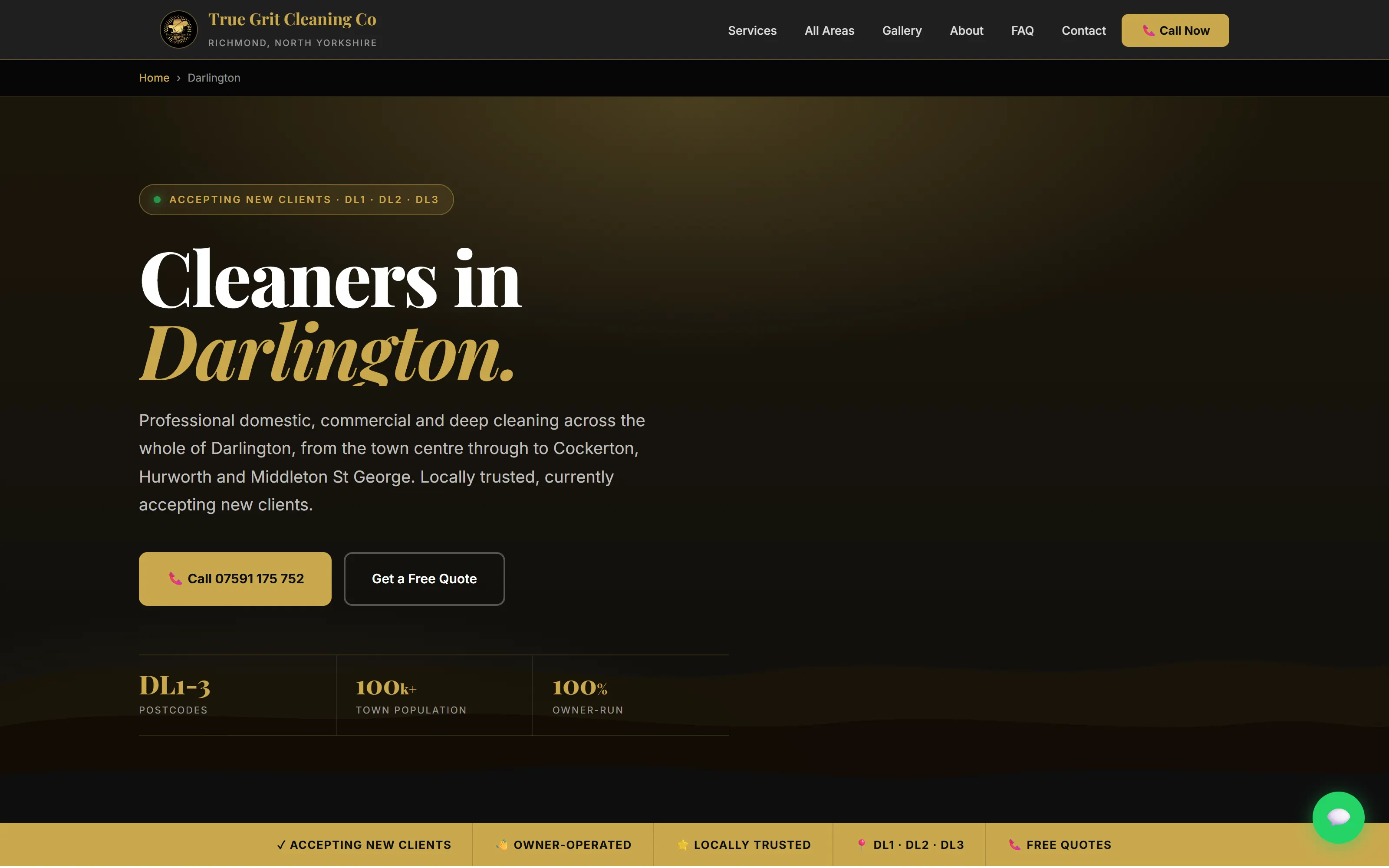
One of 18 dedicated location pages
A franchise can't catch this with a bigger AdWords budget. The technical gap is the moat.
100/100 Lighthouse across the board, sub-second mobile LCP, and full schema on every page type. None of it is shouty, but all of it is the foundation that lets the site compound as True Grit publishes more content over the months ahead.

The phone goes
straight to Nikki.
In this sector, half the enquiries come by phone, so call-now CTAs sit everywhere and the phone goes straight to Nikki, the owner. A 'currently accepting new clients' banner she can toggle on or off is a small honesty signal that builds trust before the first call.
Nikki, who runs True Grit
Built for the van,
not the desk.
Tradespeople and property managers book from phones, between jobs, not from a desk. The mobile build leads with a stacked hero, the live weather widget, and full-width call buttons that put the enquiry one thumb away.
It doesn't look like a cleaning company website. That's the point.
The brand reads as a deliberate, considered operation, which is exactly the credibility signal True Grit needs when it bids against franchises with national marketing budgets.
How the build came together, in detail.
The brief, in one paragraph
A small Dales cleaning operation needed a website that punched above its weight. The competition was a sea of national franchises with template sites and stock photos, and a few solo operators with Wix builds. True Grit needed to land somewhere new, visibly more careful, visibly more local, visibly more brand-led, and rank for every “cleaner in [Dales village]” search from day one.
The brand
We built the identity around the geography. The Dales feel like the American West, vast, weathered, demanding, and we leaned into that without ever tipping into pastiche. An editorial italic serif for the wordmark. A deep brown + gold palette that holds up at any scale. A silhouette horse rider that rides across the bottom of the hero like a still from a Coen Brothers film. A tone of voice that reads more like a craftsman’s signage than a service-industry pitch.
The result is a brand that immediately tells a buyer: this is not the same as the four other “Yorkshire Cleaning Co” sites in your search results.
What we actually built
A bespoke, hand-coded site, no theme, no page-builder, no template. Every page custom, every interaction designed for the specific way True Grit’s clients (holiday-let owners, homeowners, commercial property managers) actually behave.
The full feature list:
- Live booking ticker at the top of every page, this week’s confirmed jobs scrolling across, real bookings, refreshed weekly. Proof of activity rather than promises.
- Live weather widget pulled from the Reeth area, sitting quietly in the hero. A small detail, but one that signals the brand’s rootedness in a way no amount of “local family business” copy ever could.
- Multi-step quote form that walks the visitor through what they need without overwhelming them, service type, property size, frequency, contact. Conversion-optimised flow that mirrors how property managers actually think about a clean.
- Animated stat counters that tick from zero up to the real numbers, including the current 18 towns served, when they scroll into view.
- Real photo gallery, actual photos of actual cleans across the Dales. No stock libraries, no marigolds, no blue gradients.
- 6 detailed service pages for Holiday Let, Domestic, Commercial, Deep Clean, End of Tenancy, and Catterick March-Out, the last one a specialist offering with first-pass guarantees for military families that nobody else in the area offers.
- 18 dedicated location pages for the current service area. Each one a real piece of content with localised intro, postcode tags, accepting-new-clients banner, and a quote CTA.
- A “currently accepting new clients” availability banner that the owner can toggle on or off, a small honesty signal that builds trust before the first call.
- A weekly-updated “this week’s properties” gallery so prospects see fresh work, not a stagnant portfolio.
- Call-now CTAs everywhere because in this sector, half the enquiries come by phone, and the phone goes straight to Nikki, the owner.
The SEO strategy
This is where the work ran deepest. Cleaning is a brutal local-search market, every postcode has half a dozen operators, plus the franchises with marketing budgets bidding for the same terms. True Grit’s only path through was to out-architect them.
Technical SEO
Built into the foundations from day one, not bolted on:
- Sub-second Largest Contentful Paint on mobile, the Core Web Vital that Google weights most heavily for local results
- 100/100 Lighthouse scores across Performance, Accessibility, Best Practices, and SEO on every page type
- Schema markup on every page:
LocalBusinessandProfessionalServicefor the company,Servicefor each offering,FAQPageon the location pages,BreadcrumbListsite-wide - NAP consistency (name, address, phone) baked into the page chrome, same data in the same format on every URL
- Auto-generated XML sitemap + sitemap-index, indexed and submitted to Google Search Console at launch
- Robots.txt configured for clean indexing, no orphan URLs, no parameter pollution
- Open Graph + Twitter Card meta on every page so shared links render with the right image and copy
- Canonical URLs explicitly set everywhere to prevent duplicate-content issues across the service x location matrix
Local SEO architecture
The 18 location pages aren’t doorway pages, every one has unique, substantive content:
- Localised intro paragraph naming specific landmarks, postcodes, and travel times
- Service availability tags scoped to that town
- Local trust signals, “accepting new clients in [town]”, first-time cleans, recent local work
- FAQ block specific to the location’s typical jobs (holiday-let-heavy towns get different FAQs to commuter-belt towns)
- LocalBusiness schema with the correct postcode prefix per location
- Internal links to relevant service pages and adjacent town pages
Adding a new town is one entry in a data file, the page builds itself with full schema, full content slots, and full internal linking.
Content strategy
The blog architecture is in place and ready to roll. Phase two of the ongoing local SEO work focuses on:
- Holiday-let topics, turnaround timing, linen handling, host-grade standards. This is the highest-value search market in the catchment and the most under-served by competitors.
- Seasonal hooks, March-out cleans peaking in spring, deep cleans in autumn, holiday-let surges in summer. Content scheduled against those peaks.
- “How to” content for property managers, checklist-style pieces that earn backlinks from holiday-let directories and Airbnb host communities.
Google Business Profile + off-page
GBP fully optimised at launch, services, photos, opening hours, service area polygons. The site links into and out of the GBP correctly so the local map pack and the organic results reinforce each other. Citations across the major UK trade directories are scheduled as part of phase two.
Why the numbers matter
A Lighthouse score of 100 across the board. A sub-second mobile LCP. Full schema markup. Clean technical foundations on every page. None of this is shouty, but all of it is the kind of foundation that lets the site compound: as True Grit publishes more content over the coming months, every new page launches on top of solid technical ground rather than fighting it.
A franchise competitor with a templated WordPress site can’t catch up to this just by spending more on AdWords. The technical gap is the moat.
What’s next
The platform is built to grow. New locations, new services, and a content programme are all plug-and-play. Phase two is the ongoing local SEO work:
- Taking ownership of the Richmond / Darlington / Catterick / Dales search landscape across every relevant term
- Holiday-let-focused content programme targeting property managers and Airbnb hosts
- Backlink acquisition via directory submissions, local press, and host-community partnerships
- Monthly performance reports tracking rankings, traffic, and enquiry attribution
Six months in, we expect to be sitting at the top of the local map pack for the high-intent terms in True Grit’s catchment, and to be moving up nationally for holiday-let-specific queries.
PLAINLY PRICED
Want me to look at your website?
Tell me what kind of site you need. I come back within a working day with a clear price, scope, and next step, straight from me, the person who’ll be doing the work.
A one-off £1,200 to design and build it. Then £199 or £299 a month to keep it working.